What is a smokey eye, really? A gradient. Colour is deepest at the lash line, softens as it rises, and vanishes just below the brow, with no visible border anywhere. It can be black, bronze, plum, or emerald; what makes it smokey is the seamless fade, not the darkness.
The smokey eye is the little black dress of makeup: requested at every cocktail party, every reception, and every second bridal trial in my studio. It is also the technique people most often get wrong, because they chase darkness instead of chasing blend. Once you understand that smoke is a gradient, the whole look becomes almost mechanical, and I mean that as the highest compliment an engineer-turned-artist can give.
Below is the exact six-step method I use in my chair and teach in my classes in Ranchi, followed by the colour stories I reach for across different ceremonies, skin tones, and wedding traditions around the world.
The Six Steps of a Flawless Smokey Eye
- Prime and set the lidAn eye primer, or a dab of concealer, pressed over the lid and set with a skin-tone powder. This single step is why studio smoke lasts eight hours and bathroom-mirror smoke creases by dinner.
- Build the transitionTake a matte shade two steps deeper than your skin, on a fluffy brush, and sweep it through the crease in windscreen-wiper motions. This soft halo is what every deeper colour will melt into.
- Deepen the outer VWith a denser brush, press your dark shade into the outer corner and along the lash line, dragging it no more than a third of the way in. Build in sheer layers; you can always add smoke, but subtracting it means starting over.
- Smudge the linerLine the upper lash line with a kohl or gel pencil, then smudge it upward into the shadow with a small brush before it sets. Tightline the upper waterline so no skin shows between lashes.
- Blend upward, always upwardReturn to the fluffy brush, clean, and buff the top edge of the smoke until you cannot say where colour ends and skin begins. Blend up and out, towards the tail of the brow.
- Light the inner corner and finishA touch of champagne or gold at the inner corner, a clean under-eye with concealer, generous mascara or lashes, and groomed brows to frame the drama.
Smoke is not a colour. Smoke is the absence of edges.
Colour Stories Beyond Black
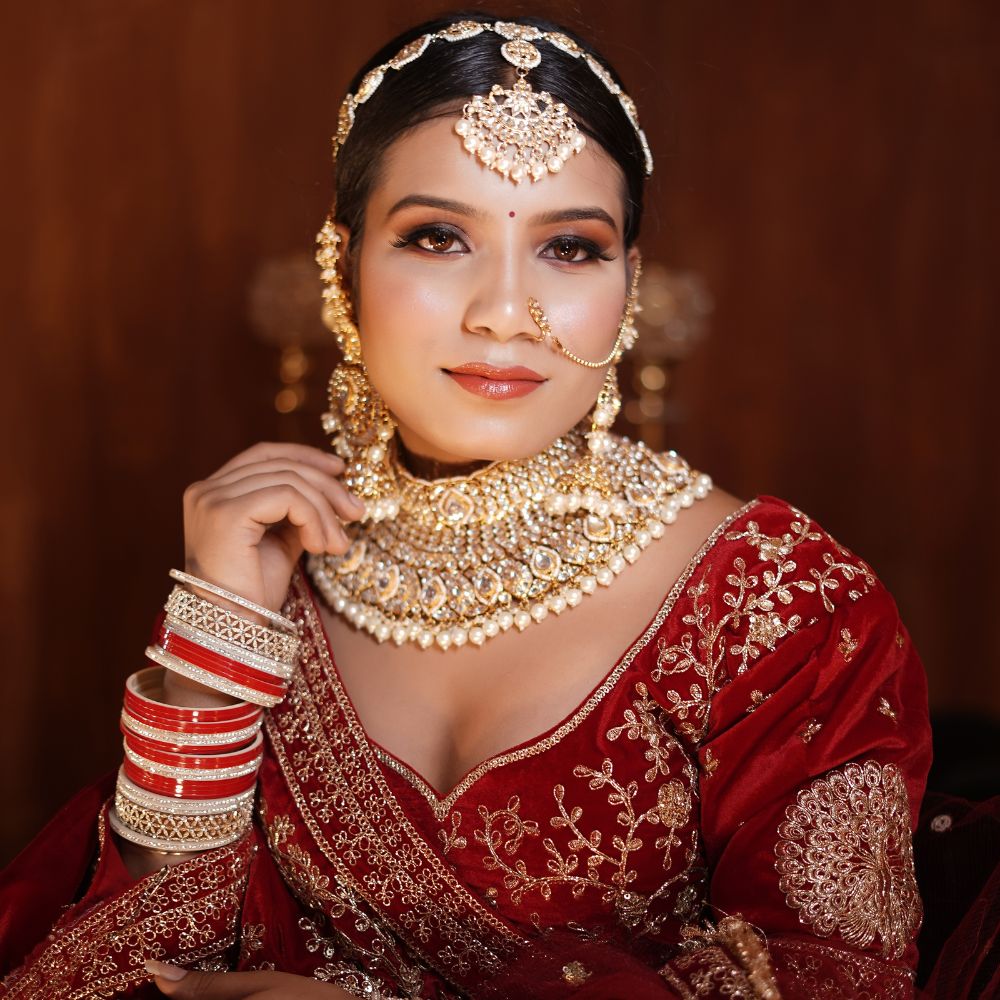
Black smoke is a classic, but it is only one chapter. On golden Indian skin, a bronze-and-copper smoke at a haldi or golden-hour mehndi photographs like warm firelight. Plum and wine smoke deepens beautifully for receptions, especially against maroon and emerald outfits. For a cocktail night, an emerald or gunmetal smoke feels expensive without ever feeling heavy. And for a white-gown ceremony, I love a soft brown smoke, barely there, that gives the eyes depth while letting the veil and the vows lead.
The Mistakes That Muddy the Smoke
Nearly every muddy smokey eye fails at one of four points. The transition shade was skipped, so the dark colour has nothing to fade into. The edges were left hard, which reads as bruise rather than smoke. Too much product went on in one pass, past the point of blending back. Or the under-eye was never cleaned up, so fallout dulls the whole face. My studio fix for that last one is simple: on dramatic eye days, do the eyes first and the base after, so fallout sweeps away with a single wipe.
Making It Yours
Hooded lids should build the smoke slightly above the natural crease, judged with the eye open in the mirror, so the gradient shows when you blink and when you smile. Smaller eyes stay bright by keeping the waterline nude instead of black and concentrating depth at the outer third. And if you are a bride, always smoke-test the look at a trial under flash photography; what the mirror softens, the camera declares.