
How do you choose the perfect lipstick shade? Answer four questions in order: what is your undertone (cool, warm, olive, or neutral), how deep is your skin, what is the occasion, and what finish will survive it. A shade that answers all four never looks wrong, in person or in photographs.
There is a drawer in my studio with over a hundred lipsticks in it, and yet on most brides I use one of perhaps twelve. That is the quiet truth of lip colour: the perfect shade is not found by owning more, it is found by asking better questions. Here are the four I ask in the chair, and how you can answer them for yourself at home.
How Do You Read Your Undertone?
Turn your wrist to the light. Veins that look blue or violet suggest a cool undertone; greenish veins suggest warmth; if you honestly cannot decide, you are likely neutral or olive, which is wonderfully common across Indian skin. The jewellery test confirms it: silver flatters cool undertones, gold flatters warm ones, and if both look equally right, welcome to neutral territory, where almost everything works with the right depth.
Cool undertones glow in blue-based reds, berries, and mauves. Warm undertones come alive in brick, terracotta, peach, and orange-reds. Olive skin, which can turn ashy under the wrong pink, is stunning in warm roses, brick-browns, and wine.
Which Shades Love Indian Skin?
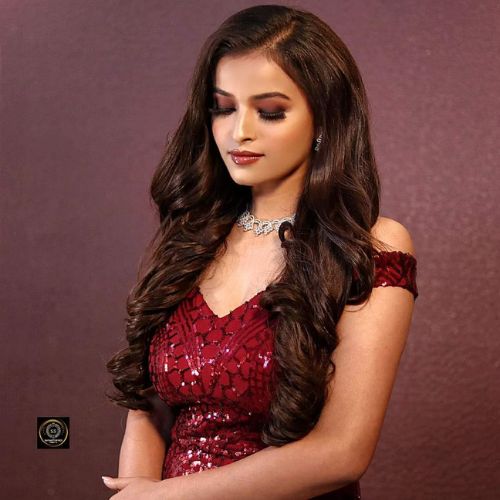
Every depth of skin has its power reds. Deeper complexions carry wine, oxblood, and brick with a richness lighter skin can only envy. Medium and dusky tones, the heart of my Ranchi clientele, are made for the classic blue-red, terracotta, and warm maroon. Fair-warm skin sings in coral-reds and rosy bricks. The only universal rule I trust: when in doubt, go half a step deeper than you think, because cameras and daylight both dilute lip colour.
The right lipstick does not sit on your face. It joins it.
Matching the Shade to the Occasion
A wedding week is a wardrobe of lips, not one. For a haldi morning, I keep it dewy and alive: a tinted balm or sheer coral that survives turmeric and laughter. For the wedding ceremony itself, a long-wear liquid or satin in the bride's power red, tested at the trial against the outfit's exact red, because two reds that almost match will fight in every photo. Receptions can go deeper and more velvet: wine, plum, rich maroon under the chandeliers. A white-gown ceremony loves a rosewood or petal nude that lets the veil lead, and a nikkah look glows in soft mauve and rose. The occasion sets the volume; your undertone sets the temperature.
Finish Is Half the Shade
The same pigment reads completely differently in different finishes. Matte is the marathon runner: longest wear, most drama, least forgiving on dry lips. Satin is the diplomat, comfortable and polished, my default for mothers of the bride. Gloss is youth and light, best layered over a liner so it cannot wander. Velvet, the modern blurred matte, is the finish of the moment: soft-focus edges, weightless feel, remarkably durable.
And whatever the finish, the ritual is the same: line the lips fully, not just the edges, fill with the lipstick, blot once on a tissue, and press a second coat. That sandwich is why studio lipstick outlives a wedding feast.
Shortcuts Worth Keeping
- Exfoliate and balm the lips ten minutes before colour, then blot the balm away completely.
- Buy your power red twice: once in long-wear liquid for events, once in satin for everything else.
- If a nude makes you look tired, it is too pale or too grey; warm it up or go a shade deeper.
- Photograph a new shade in daylight and at night before an event ever meets it.
- A touch of gloss only at the centre of the lower lip gives fullness without the slide.